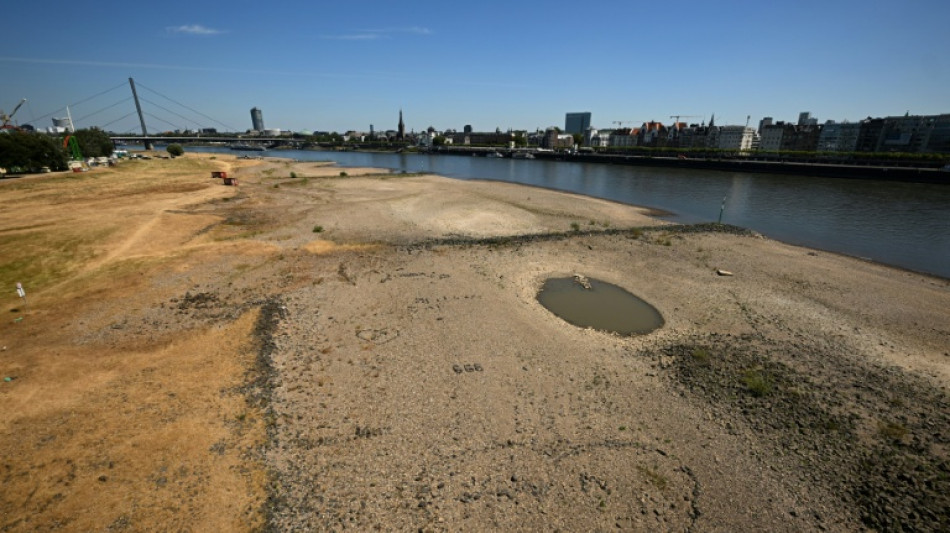
Alarm over climate-linked low level of German waterways / Photo: Ina FASSBENDER - AFP
Alarm is growing among German shipping and industry about low rainfall sapping major waterways, with one stretch of the Rhine briefly dipping to its previous record low on Friday.
As with other parts of Europe, Germany has experienced low rainfall coupled with soaring summer temperatures which scientists have attributed to human-caused climate change.
The WSV agency responsible for managing German waterways told AFP that early on Friday one stretch of the Rhine, a major artery for commercial shipping, near the town of Kaub briefly dropped to the record low previously recorded in 2018.
While the level there subsequently rose again, the WSV predicted that on Saturday the gauge reading for the Rhine in the city of Duesseldorf could drop to 21 centimetres -- two centimetres below a record set in October 2018.
Authorities further downstream in the Netherlands said on Thursday that worsening drought there had pushed the Rhine to its lowest recorded level at the German border.
The low level of the Rhine could have economic consequences for several of Germany's industries, such as the chemicals and steel, which depend on the river to transport large quantities of goods.
The country's construction federation has warned that the Rhine is "increasingly being pushed to its capacity" because of the repeated instances of low water levels.
The situation shows "how vulnerable Germany's transport and logistics are", the body said, adding that authorities urgently needed to make waterways "more modern and resilient to climate change".
The federation pointed out that Germany's industries, already struggling from high energy costs and foreign competition, can ill afford another burden.
The Rhine is the second longest river in western and central Europe after the Danube, and nine countries depend on it for drinking water, freshwater, hydropower or shipping.
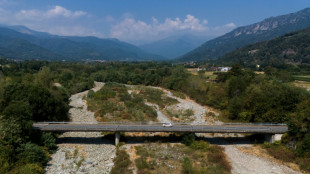
On Thursday Italian authorities also raised the drought alert level to "high" in the Po Valley, home of the country's longest river, due to worsening conditions and unfavourable weather forecasts.
G.Yassin--CdE