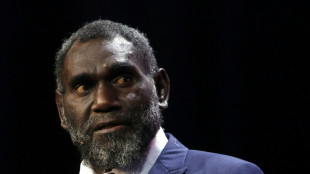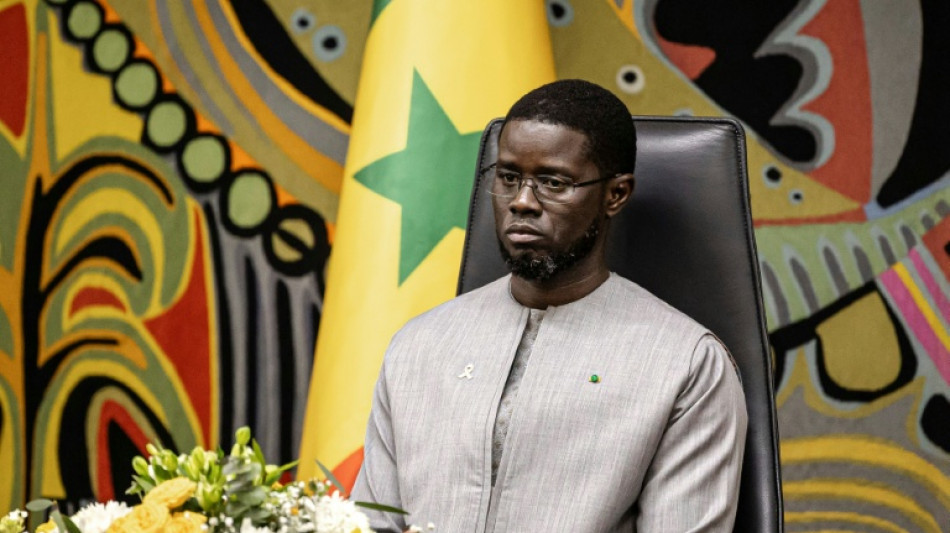
Senegal's new government strengthens president against rival: analysts / Photo: PATRICK MEINHARDT - AFP/File
The new government formed by Senegal's President Bassirou Diomaye Faye in defiance of his powerful sacked prime minister can overcome potential efforts by his estranged ally to block its reforms, analysts say.
The dispute between Faye and his former mentor Ousmane Sonko has sparked a political crisis in the west African country, which is struggling with high debt.
Faye announced his new 30-member cabinet on Monday less than two weeks after he fired Sonko and dismissed the government following disagreements over issues including the troubled economy.
Sonko's allies promptly appointed him speaker of parliament and he remains the undisputed leader of Pastef, the party he founded in 2014 -- to which Faye also belongs -- and which controls 130 of the 165 seats in Senegal's single legislative chamber.
Elected to lead the National Assembly on May 26, Sonko promised he would not use his new role "to orchestrate institutional chaos", but was quick to clarify that the institution would also not become a "rubber-stamp body".
Retired senior civil servant Youssou Diallo told AFP he believed "will not be able to block government action... At most, he could slow it down."
Meanwhile, the president is "the keystone of the institution", leading the armed forces and having the power to dissolve the Assembly, Diallo said.
"The nature of our system is presidential. It grants greater powers to the president," he said.
Now without Sonko's mentorship, Faye "has surrounded himself with people who enable him to fully exercise his functions", said Ousmane Sene, director of the Dakar-based research centre WARC.
While Pastef's majority in the National Assembly can censure the government, in the event of a deadlock the president can resort to "exceptional powers" to govern by decree for three months, noted Diallo.
From November, after two years in office, Faye will also be authorised to dissolve the National Assembly in an attempt to secure a new majority.
- 'Implosion' -
Hours before the new government was announced on Monday, Sonko declared that Pastef "will not take part and will not be represented by any ministers."
But about 10 of its allies and party members appeared on Faye's cabinet list.
"If some within Pastef are unconditional supporters of Sonko, others do not fully share in Sonko's actions," said Sene.
Diallo said that "most of Ousmane Sonko's allies have left him, as have several prominent activists. Pastef appears to be going through a phase of implosion," the analyst judged.
"On the other hand, President Diomaye Faye seems to have come out stronger from this confrontation."
Pastef will hold a party congress at the weekend to confirm Sonko as its leader.
Prevented from running in the last presidential election due to a defamation conviction, Sonko had designated his right-hand man, Faye, to replace him in the race.
Tensions emerged in July 2025, when the then-prime minister sharply attacked Faye, alleging a "problem of authority" in the country.
Local elections are scheduled for 2027, ahead of a presidential election in 2029.
J.Badr--CdE