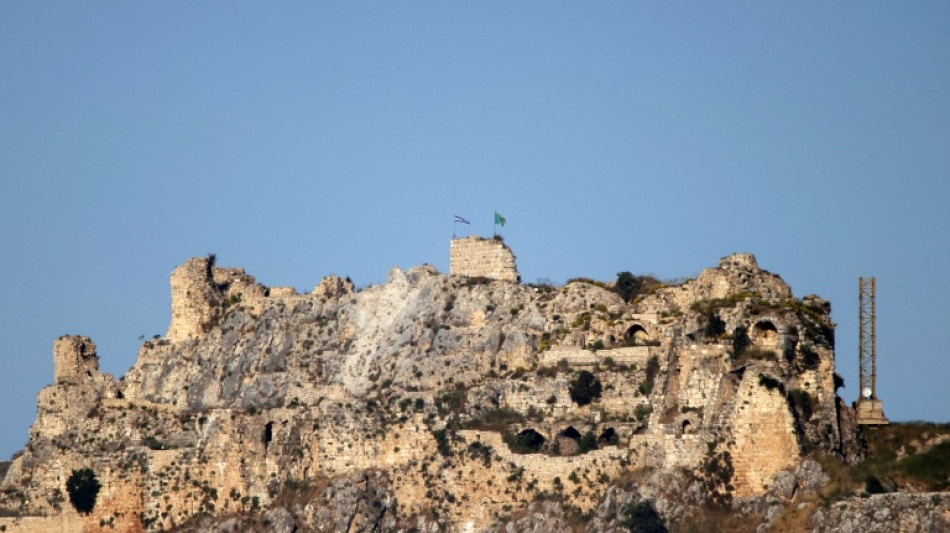
Israel PM says capturing Beaufort 'dramatic shift' in Lebanon offensive / Photo: - - AFP
Israeli Prime Minister Benjamin Netanyahu vowed to push deeper into Lebanon after his military took over the medieval castle of Beaufort on Sunday, calling it a "dramatic shift" in the campaign against Hezbollah.
The Iran-backed militant group said on Sunday it targeted Israeli army positions and infrastructure in Shlomi and Nahariya in northern Israel, while air raid sirens blared in the Acre area.
Lebanon was dragged into the Middle East war on March 2 when Hezbollah fired rockets towards Israel in retaliation for the US-Israeli killing of Iran's supreme leader.
A truce to halt the fighting between Israel and Hezbollah began on April 17, but has never been observed. Both sides accuse each other daily of violating the ceasefire and justify their attacks by the other's alleged breaches.
As fighting escalated in Lebanon, France said on Sunday it requested an emergency meeting of the United Nations Security Council, alarmed by Israel's "ever-deeper occupation of Lebanese territory".
Israeli forces used the Beaufort castle, also known as Qalaat al-Chakif, as a base during their previous two-decade occupation of southern Lebanon that ended in 2000.
In a video statement released hours after the military took Beaufort, Netanyahu said "we have returned united, determined and stronger than ever".
"Now my directive is to deepen and expand our hold in places that were under Hezbollah's control. The capture of Beaufort is a dramatic stage and a dramatic shift in the policy we are leading."
Shelling was audible and smoke rose from the surrounding area as AFP saw the Israeli flag above the castle.
Israeli Defence Minister Israel Katz said troops had captured the historic strongpoint, which commands sweeping views of south Lebanon, as they expanded their ground operations.
"Forty-four years after the heroic Battle of Beaufort, and on this day commemorating the soldiers who fell in the First Lebanon War (1982), our troops have returned to the summit of Beaufort and once again raised the Israeli flag there," Katz said in a social media post.
- 'We will return' -
In a shelter for the displaced in Sidon, southern Lebanon's largest city, Zeinab Fakih, from Nabatieh, told AFP "of course we are afraid".
"It is impossible for us to return to our home, because the city is in great destruction," she said, adding that the arrival of Israeli forces at the castle was "tragic".
Issa Tfaily, also displaced from Nabatieh, said: "We will return... if not today, then tomorrow, as long as there is resistance."
The push to Beaufort came as the Israeli military issued a sweeping evacuation order to areas south of the Zahrani River, north of the Litani and around 40 kilometres (25 miles) from the border.
It said it was targeting "Hezbollah infrastructure in Tyre and several additional areas in southern Lebanon" as Lebanon's state-run National News Agency reported a series of strikes on the area.
An Israeli strike near a hospital in Tyre wounded 13 staffers, according to the Lebanese health ministry.
An AFP correspondent in Tyre saw a large plume of smoke rising from the city with sounds of ambulances at the scene.
Lebanese Prime Minister Nawaf Salam had accused Israel on Saturday of pursuing a "scorched-earth policy and collective punishment" in the south, urging a halt to the fighting.
French Foreign Minister Jean-Noel Barrot said on Sunday that "nothing can justify the continuation of Israeli military operations in Lebanon and its ever-deeper occupation of Lebanese territory".
Military delegations from Lebanon and Israel held security talks in Washington on Friday, with more US-brokered negotiations planned next week.
The Israeli army said Sunday that one of its soldiers had been killed a day earlier by a Hezbollah explosive drone, bringing to 25 the number of Israeli military deaths in Lebanon since early March.
The Lebanese health ministry says Israeli attacks have killed more than 3,371 people since early March.
burs-lk/ris/nad/amj
H.Tawfik--CdE