US consumer inflation up more than expected as midterms loom / Photo: Patrick T. Fallon - AFP/File
US consumer inflation was hotter than anticipated in September, government data showed Wednesday, as Washington's war with Tehran pushed energy costs higher, deepening strains on American households ahead of next month's midterm elections.
The uptick underscores voter worries over high costs of living, and comes as President Donald Trump is campaigning in US states to shore up support for his Republican party as it tries to retain control of Congress.
The consumer price index (CPI) rose 3.7 percent year-on-year in September, the Department of Labor said, more than the 3.6 percent analysts forecast according to MarketWatch.
This was a notable acceleration from 3.4 percent in August, in one of the last major economic reports before the November 3 vote.
Inflation picked up pace on a month-on-month basis too, accelerating from 0.4 percent in August to 0.6 percent last month.
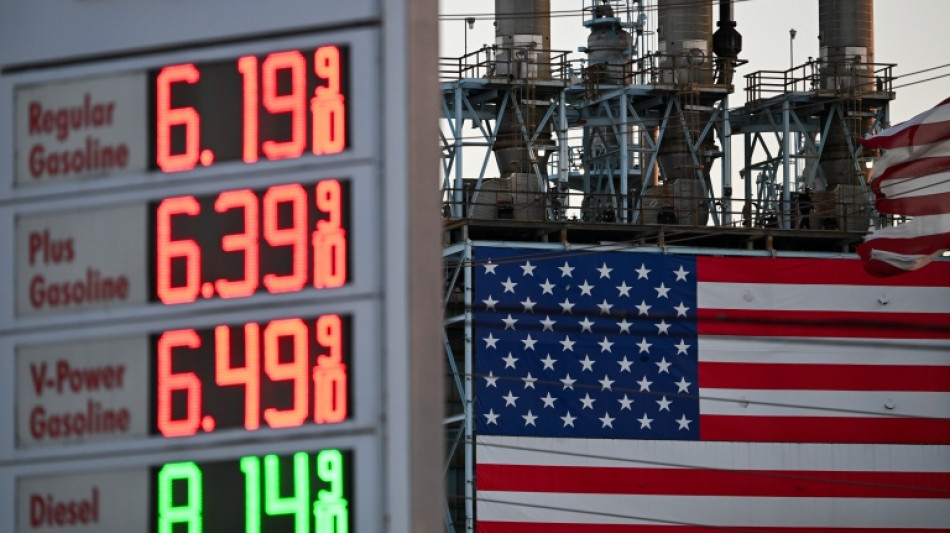
Gasoline costs accounted for more than half of the jump, surging 9.1 percent on a monthly basis, Wednesday's report said.
Energy prices have jumped since the United States and Israel attacked Iran in late February, prompting Tehran to block off the Strait of Hormuz, a vital route for oil and gas shipments.
Average prices at US gasoline pumps have surged more than 45 percent since the Middle East war to $4.33 per gallon, according to AAA motor club data.
Diesel prices have surged even more, by 67.7 percent, boosting the cost of transporting goods and threatening further spillovers to consumers.
"Again, the Iran-US conflict has led to higher motor fuel costs that everyone is experiencing," ING economist James Knightley told AFP.
"The US is also seeing substantial increases in airline fares," he said, adding that this will likely contribute to additional price pressures.
With the underlying US economy remaining strong as massive spending linked to the artificial intelligence sector boosts demand for chips and labor, economists warn that higher costs could continue filtering through to households.
Excluding volatile food and energy prices, core CPI was up 2.6 percent from a year ago.
But Knightley does not expect the latest report to prompt the Federal Reserve to raise interest rates at its October 27-28 meeting.
Several Fed policymakers have suggested "that we don't need to see back-to-back interest rate increases," he said, instead leaning towards "a slow and steady" approach.
Industries sensitive to interest rates, like housing, are already under pressure from steeper borrowing costs.
"I think the Federal Reserve just wants to be a little bit careful and cautious in terms of its policy tightening," Knightley said.
F.Walid--CdE