Iran steps up attacks on Mideast economy in response to US-Israeli strikes / Photo: ATTA KENARE - AFP
Iran stepped up its attacks on economic targets and US missions across the Middle East on Tuesday as President Donald Trump warned it was "too late" for the Islamic republic to seek talks to escape the war.
As drones and missiles crashed into oil facilities and US embassies in the Gulf, Washington's ally Israel bombarded targets in Iran and pushed troops deeper into Lebanon to battle the Tehran-backed militia Hezbollah.
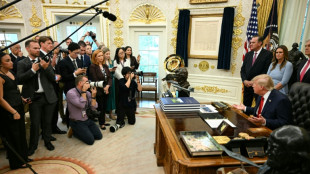
"Their air defence, air force, navy, and leadership is gone. They want to talk. I said: 'Too late!'," Trump posted on his social media site, two days after he had agreed to talks and four days after US and Israeli strikes wiped out much of Iran's senior leadership.
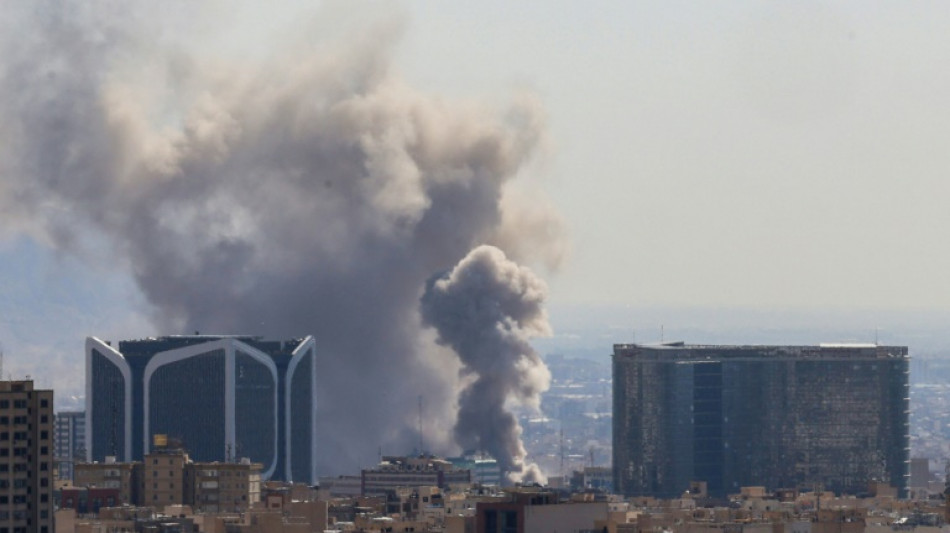
As if to underline Trump's new stance, loud blasts echoed around downtown Tehran, AFP journalists in the city reported. According to Iranian media, US and Israeli strikes had targeted the building housing the committee that is to elect Iran's new supreme leader.
"The military has launched a ninth wave of strikes in Tehran. The Air Force has now begun a large-scale wave of strikes targeting the Iranian terror regime's infrastructure in Tehran," the Israeli military said.
At almost the same moment, the US embassy in Riyadh -- which was damaged and briefly caught fire overnight in an Iranian drone strike -- on Tuesday warned of an imminent attack in the eastern Saudi city of Dhahran, home to much of the kingdom's oil and gas installations along the Gulf coast.
"There is a threat of imminent missile and UAV (drone) attacks over Dhahran. Do not come to the US Consulate," the embassy posted on social media.
As Trump dismissed any remaining hope of a negotiated solution, Israel's Foreign Minister Gideon Saar urged foreign capitals to cut all ties with Tehran "following the Iranian regime's attacks on all its neighbours and the massacre of its own people".
China's Foreign Minister Wang Yi, according to the official Xinhua news agency, warned Saar in a call that Beijing opposes the strikes. "Force cannot truly solve problems -- instead, it will only bring new problems and severe after-effects," he said.
The United States and Israel triggered the rapidly spreading war on Saturday with a strike on Tehran that killed supreme leader Ayatollah Ali Khamenei and several more senior Iranian figures, followed by days of air and missile raids aimed at weakening the remaining government.
But Iran's armed forces responded with missile and drone attacks on Israel, US embassies and military bases and on its Arab neighbours around the Gulf, targeting oil and gas facilities, ports and airports, foreign missions and landmark hotels.
Qatar has shut down its massive LNG industry, shipping traffic through the strategic Straits of Hormuz has all but halted and thousands of flights have been cancelled, leaving foreign governments scrambling to rescue trapped travellers.
The war has already sent shockwaves through world markets. Energy prices are soaring and share prices are falling. Asian giant India added its concern to China's on Tuesday, with the foreign ministry expressing "great anxiety" for the fate of its 10 million citizens in the Gulf region.
"Our trade and energy supply chains also traverse this geography. Any major disruption has serious consequences for the Indian economy," ministry spokesman Randhir Jaiswal said.
- Market shockwaves -
Drones meanwhile struck a fuel tank in Oman and in the UAE an oil storage zone was hit by falling debris from an intercepted drone, as Iran apparently widened its targets beyond US assets.
Qatar's state-run QatarEnergy said it would halt some downstream production of substances including urea, polymers, methanol and aluminium after Iran attacked two gas processing plants.
The announcement prompted an immediate two percent rise in the price of aluminium on the London Metal Exchange.
In Oman, several drones targeted the port of Duqm on its eastern coast on Tuesday. The attack was the second on the port in three days, with the sultanate hit despite acting as a mediator between Iran and the United States just days prior to the war.
The UAE says it has been targeted with more than 800 drones and nearly 200 missiles since the war erupted.
Reporters in the Saudi capital Riyadh saw smoke damage on the walls and roof of the American embassy after two drones hit it overnight, starting a fire in one building.
Saudi police were swarming the diplomatic quarter and checking the IDs of everyone who entered. The Saudi foreign ministry described the attack as "heinous and unjustified".
Iran's Revolutionary Guards spokesman Ali Mohammad Naini meanwhile warned that "the gates of hell will open more and more, moment by moment, upon the United States and Israel".
United Nations rights chief Volker Turk said he was "deeply shocked" by the war's toll on civilians, and the UN nuclear watchdog said Iran's Natanz enrichment plant appeared in satellite imagery to have suffered "recent damage".
On Monday, the US State Department had urged "Americans to DEPART NOW" from all of the countries and territories of the Middle East "due to serious safety risks".
Israel, meanwhile, said it was seizing new forward positions inside southern Lebanon, after Hezbollah fired missiles in support of its backer Iran, provoking a furious Israeli bombardment.
Defence Minister Israel Katz said Israeli forces had been authorised "to advance and take control of additional strategic positions in Lebanon in order to prevent attacks on Israeli border communities".
Shortly afterwards, the military spokesman said: "In practice, Northern Command has moved forward... and is creating a buffer, as we promised, between our residents and any threat."
A Lebanese army source said Israeli forces had advanced from around Kfar Kila, in an apparent attempt "to establish a broad security belt in south Lebanon".
- Death toll rises -
According to a Lebanese military source, following Israel's "escalation", the Lebanese army redeployed troops posted near the southern border back to their bases. Hezbollah said it had launched strikes targeting three Israeli bases.
A spokesman for the UN refugee agency said 30,000 Lebanese had been driven from their homes and registered at collective shelters, while "many more slept in their cars on the side of roads".
Iranian media have reported hundreds of Iranian casualties, including scores at a girl's school, although AFP reporters have not been able to verify tolls independently.
The US-based Human Rights Activists News Agency (HRANA) on Tuesday said there were 101 casualties inside Iran on the third day of the war, including "85 civilian deaths and 11 military personnel killed".
burs/dc/phz
W.Bakr--CdE